Glossary

A-C | D-F | G-I | J-L | M-O | P-R | S-U | V-Z


ACFA
Asian Committee for Future Accelerators
Founded in 1996, the Asian Committee for Future Accelerators seeks to strengthen ties in accelerator-based science among Asian countries. It makes recommendations to governments about future projects and works closely together with ICFA. As of 2006, its members are: Australia, Bangladesh, People's Republic of China, India, Indonesia, Japan, Republic of Korea, Malaysia, Pakistan, Singapore, Taiwan, Thailand, Vietnam. The Philippines are a proposed member.

Further Reading: http://www.symmetrymagazine.org/cms/?pid=1000319

ALCPG
American Linear Collider Physics Group
The ALCPG manages the process of establishing an experimental program in the Americas for the International Linear Collider.

ATF
Accelerator Test Facility
A test facility at KEK, ATF will generate a super low-emittance beam, an essential characteristic of a beam at the ILC.

ATF2
Accelerator Test Facility 2
An extension to the ATF at KEK, ATF2 is an international project that will build and operate a test facility for the final focus system for the ILC. It is supposed to create a tightly focused, stable beam by making use of the small emittance from ATF.

Further Reading: http://symmetrymagazine.org/cms/?pid=1000320

BCD
Baseline Configuration Document
Written in December 2005, the BCD defines the machine parameters for the International Linear Collider , operating at the 500-billion-electronvolt (GeV) energy level, and it allows for an upgrade to 1 trillion electronvolts (TeV) during the second stage of the project. The BCD continues to be updated and refined by physicists in the Global Design Effort.

Further Reading: http://www.symmetrymag.org/cms/?pid=1000286

BDIR
Beam Delivery and Interaction Region

CALICE
Calorimeter for the Linear Collider Experiment
International R&D collaboration to develop a high-granularity calorimeter optimised for the ILC. The group consists of about 200 physicists and engineers from 36 institutes in 10 countries of the three regions.

CARE
Coordinated Accelerator Research in Europe
The EU-funded project ensures that accelerator research and R&D in Europe is structured and coordinated.

Further Reading: http://www.linearcollider.org/newsline/readmore_1Dec_about_care.html

CCB
Change Control Board
Body of the Global Design Effort responsible for maintaining the ILC’s baseline configuration design. It assesses R&D projects and proposals to change the baseline configuration that could lead to improvements in the design.

CERN
European Organisation for Nuclear Research
A particle physics laboratory in Geneva, Switzerland that is supported by 20 member states. It is the site of the Large Hadron Collider (LHC), which is currently under construction. Over the last fifteen years, the experiments at CERN have provided particle physicists crucial information about electroweak unification.

CLIC
Compact Linear Collider
A proposed linear collider under study by an international group based at CERN.The proposal is for a collider that could reach energies of 5 TeV.

Further Reading: http://www.symmetrymag.org/cms/?pid=1000156

CDR
Conceptual Design Report
Now referred to as the Reference Design Report (RDR) for the International Linear Collider.

Back to Top


DCB
Design / Cost Board of the Global Design Effort
The DCB of the Global Design Effort is responsible for assessing and providing guidance for the overall Reference Design Report design effort. It has nine members.

DCR
Detector Concept Report
Delivered to the GDE by the end of 2006, the DCR will describe the physics motivation and capabilities of the ILC and will be published at the same time as the Reference Design Report.

DESY
Deutsches Elektronen-Synchrotron
Laboratory located in Hamburg, Germany. It is the site of the HERA accelerator, which hosts the ZEUS and H1 experiments, and the future X-ray free electron laser XFEL.

DHCAL
Digital Hadron Calorimeter

The digital hadron calorimeter is a project that the CALICE collaboration pursues for ILC detectors.

DOE
Department of Energy
One of the principal federal agencies supporting research in the physical sciences in the United States. Through its Office of Science it provides approximately 90% of the support for High Energy and Nuclear Physics.

EC
Executive Committee

A committee consisting of the director, regional directors and regional accelerator leaders in the Global Design Effort.

View organisation chart: http://www.linearcollider.org/cms/?pid=1000219

Read meeting notes: http://www.linearcollider.org/cms/?pid=1000002

ECAL
Electromagnetic CALorimeter
Part of a particle detector that measures the momentum of the particles passing through it. It is optimised for electrons and photons. See also HCAL.

ECFA
European Committee for Future Accelerators
Its members are in charge of long-term planning of high-energy facilities in Europe to ensure a valid research programme and a balance between national and international labs and universities as well as a balance between research and education. It is split into Plenary and Restricted ECFA.

EDMS
Electronic Document Management System
A critical tool for managing the thousands of documents, talks, diagrams and graphics needed for designing the International Linear Collider.

Further Reading: http://www.linearcollider.org/cms/?pid=1000082

ELAN
Electron Linear Accelerator Network
Specific branch of CARE to support the ILC R&D effort in Europe.

ELCSG
European Linear Collider Steering Group
Sub-committee to ECFA, the European Committee for Future Accelerators.

EPAC
European Particle Accelerator Conference
Major European conference that takes place every two years and brings together the latest developments in accelerator R&D.

ESGARD
European Steering Group on Accelerator R&D
International group that optimises and enhances research and technical development in the field of accelerator physics in Europe by promoting mutual coordination and the pooling of European resources promoting for a coordinated utilisation and development of infrastructures.

EUDET
European Detector R&D towards the International Linear Collider
European-funded R&D project for research on future ILC detectors. It comprises 31 European institutes from 12 different countries and 20 international associates.

FALC
Funding Agencies for the Linear Collider
Group of representatives from funding agencies and governments around the world that will develop international funding mechanisms for the International Linear Collider.

Fermilab / FNAL
Fermi National Accelerator Laboratory
A laboratory, operated by the Department of Energy, located in Batavia, Illinois, US. It is the site of the machine that currently operates at the highest energy in the world, the Tevatron. For more information, see: http://www.fnal.gov

Back to Top


GDE
Global Design Effort
The Global Design Effort is an international team of more than 60 scientists and engineers, who sets the design and priorities for building the next-generation particle accelerator – the International Linear Collider.

GEANT4
GEometry ANd Tracking
A software toolkit used for high energy, nuclear and accelerator physics that simulates the passage of particles through matter.

GEM
Gas Electron Multiplier
The Gas Electron Multiplier is a proposed particle detector technology for a digital hadron calorimeter in an ILC detector.

Further reading: http://www.linearcollider.org/newsline/readmore_20070329_ftr1.html

GLC
Global Linear Collider
The GLC was the Asian proposal for a future electron-positron collider prior to the establishment of the Global Design Effort for an International Linear Collider.

GLD
Global Large Detector
One of the four detector concepts for the ILC , largely lead by Asia. The GLD has the largest calorimeter of 2.1 metres. Scientists designed it for fine segmentation and optimised it for Particle Flow Algorithms.

Further reading: http://www.linearcollider.org/newsline/readmore_20060720_feature2.html

HCAL
Hadron CALorimeter
Calorimeter optimised for incident hadrons, usually placed behind an electromagnetic calorimeter which fully contains electromagnetic showers.

ICFA
International Committee for Future Accelerators
Created in 1976, ICFA facilitates international collaboration in the construction and use of particle accelerators for high energy physics.

ILC
International Linear Collider
A proposed electron-positron collider, the ILC will complement the Large Hadron Collider, a proton-proton collider at the European Centre for Nuclear Research (CERN) in Geneva, Switzerland. Consisting of two linear accelerators that face each other, the ILC will hurl some 10 billion electrons and their anti-particles, positrons, toward each other at nearly the speed of light. Stretching approximately 35 kilometres in length, the beams collide 14,000 times every second at extremely high energies – 500 billion-electron-volts (GeV). The current baseline design allows for an upgrade to a 50-kilometre, 1 trillion-electron-volt (TeV) machine during the second stage of the project. The ILC will be designed, funded, managed, and operated as a fully international scientific project.

ILC-PES
ILC Polarised Electron Source
A polarised electron source generates particles that all spin in the same direction, consisting of an electron gun with a photocathode, a laser system and associated support systems such as vacuum and instrumentation.

The ILC-PES Study Group specifies performance parameters, develops a detailed initial design and identifies needed R&D for the polarised electron source in the ILC.

ILCSC
International Linear Collider Steering Committee
The primary role of the Steering Committee is to promote the construction of an Electron-Positron Linear Collider through world-wide collaboration. In so doing the Committee will give particular attention to Outreach, Science, Technology and Organisation of the LC project.

ILCTA
International Linear Collider Test Area at Fermilab
The ILCTA comprised of the ILCTA-Meson Detector Building and ILCTA-New Muon, is a test area at Fermilab for the International Linear Collider.

Further Reading:

http://www.linearcollider.org/newsline/archive/2006/20060112.html

http://www.linearcollider.org/newsline/readmore_20060216_feature1.html

http://www.linearcollider.org/newsline/archive/2006/20060511.html

http://www.linearcollider.org/newsline/readmore_20060817_feature1.html

ILC-TRC
International Linear Collider-Technical Reviewing Committee
In 1995, the ILC-TRC wrote a report that considers the goal to design, build and operate a TeV-scale linear electron-positron collider capable of exploring the Terascale of particle physics.

ITF
Injector Test Facility
An ILC test facility at SLAC.

ITRP
International Technology Recommendation Panel
The committee charged with recommending a Linear Collider technology to the International Linear Collider Steering Committee. In August 2004, this committee recommended cold technology for the International Linear Collider.

Back to Top


JHEPC
Japan High Energy Physics Committee
Charged with supporting high energy physics activities in Japan. In 2005 the JHEPC issued a request to the Science Council of Japan to endorse a solid commitment to the ILC.

JRA
Joint Research Activities
Joint Research Activities within Coordinated Accelerator Research in Europe focus on the most relevant R&D topics in the existing European infrastructures. The developments of the SRF Joint Research Activity consist of a major contribution to the European research effort towards the ILC project.

KEK
A high energy physics laboratory located near Tokyo, Japan. It houses the BELLE experiment, as well as the accelerator used in the K2K experiment.

LC-ABD
Linear Collider: Accelerator and Beam Delivery
A consortium of UK institute aiming to develop new techniques for the control of relativistic particle beams at the nanometre level of precision.

LCFOA
Linear Collider Forum Of the Americas
The LCFOA provides a partnership between its industry members and government funded R&D efforts during the design, component manufacturing and siting of the ILC.

LCSGA
Linear Collider Steering Group of the Americas
The LCSGA leads universities and laboratories toward U.S. participation in the International Linear Collider.

LCRD
Linear Collider Research and Development Group

LC-TPC
Linear Collider -Time Projection Chamber
A working group devoted to understanding how to build a high-performance Time Projection Chamber for the International Linear Collider.

LDC
Large Detector Concept
One of the four detector concepts for the International Linear Collider. The LDC is based on a large continuous gaseous tracker, surround by a highly granular calorimeter.

LET
Low Emittance Transport
In a low emittance beam, the particles are confined to a small space and have similar momentum. The lower the emittance, the easier it is to focus the beam and more particle collisions occur. The LET workgroup will survey the beam from the damping ring to the interaction point to insure low emittance beams for the International Linear Collider.

LHC
Large Hadron Collider
A 14 TeV proton-proton collider under construction at the CERN laboratory in Geneva, Switzerland.

Project site: http://lhc.web.cern.ch/lhc/

Outreach site: http://lhc-machine-outreach.web.cern.ch/

Back to Top


MAPS
Monolithic Active Pixel Sensors
High-speed, precise, low mass and low power devices used in particle detectors.

MDI
Machine Detector Interface
The Machine Detector Interface group evaluates how the ILC design will have an impact on the detector and physics capabilities of the machine. The group also analyses how the experimental requirements for the machine will have an impact on the ILC design.

Micromegas
MICRO-MEsh GASeous detector
A detector concept first developed at CERN, Micromegas has demonstrated promise for handling high data rates with a low-cost structure.

MPS
Machine Protection System
This group is developing the Machine Protection System for the ILC.

NLCTA
Next Linear Collider Test Accelerator
An International Linear Collider test facility at SLAC.

Back to Top


PFA
Particle Flow Algorithm
Like putting a very complicated puzzle together, a particle flow algorithm matches specific hits in the detector to particle showers, allowing physicists to analyse the collision.

RDB
R&D Board of the Global Design Effort
The Global R&D Board of the Global Design Effort is responsible for assessing and providing guidance for the overall R&D program in the International Linear Collider.

RDR
Reference Design Report

Expected to be released in early 2007, the RDR will contain a detailed design for the International Linear Collider, including a chapter on the physics goals of the machine, a Detector Concept Report and costing estimates.

RECFA
Restricted ECFA
One of the sub-committees of the European Committee for Future Accelerators. The Restricted ECFA is composed of one member per country and advises the ECFA chairman and secretary.

RF
Radiofrequency
The portion of the electromagnetic spectrum in which electromagnetic waves can be generated by alternating current.

Back to Top


SCRF
Superconducting Radiofrequency Cavities
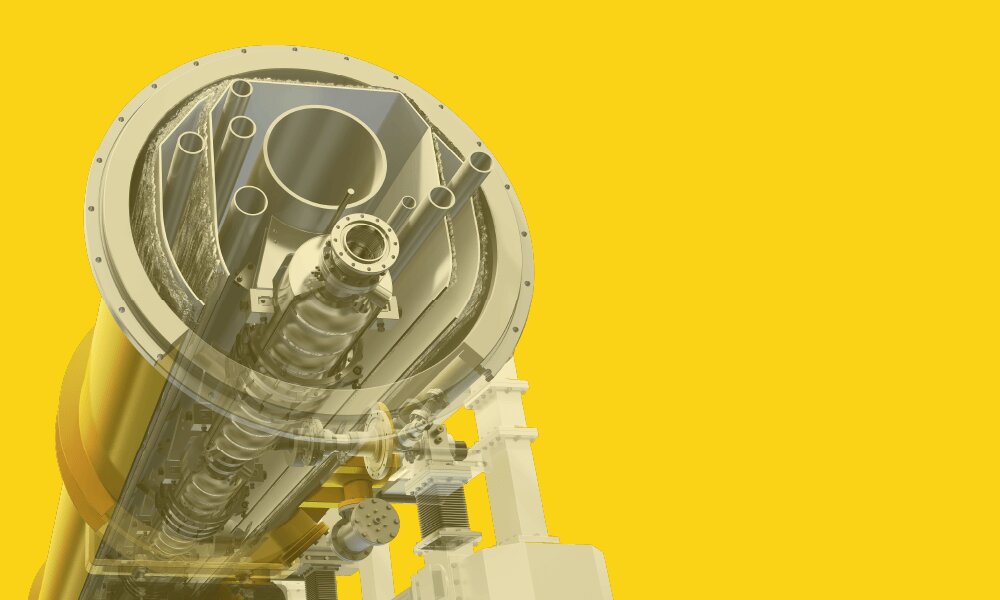
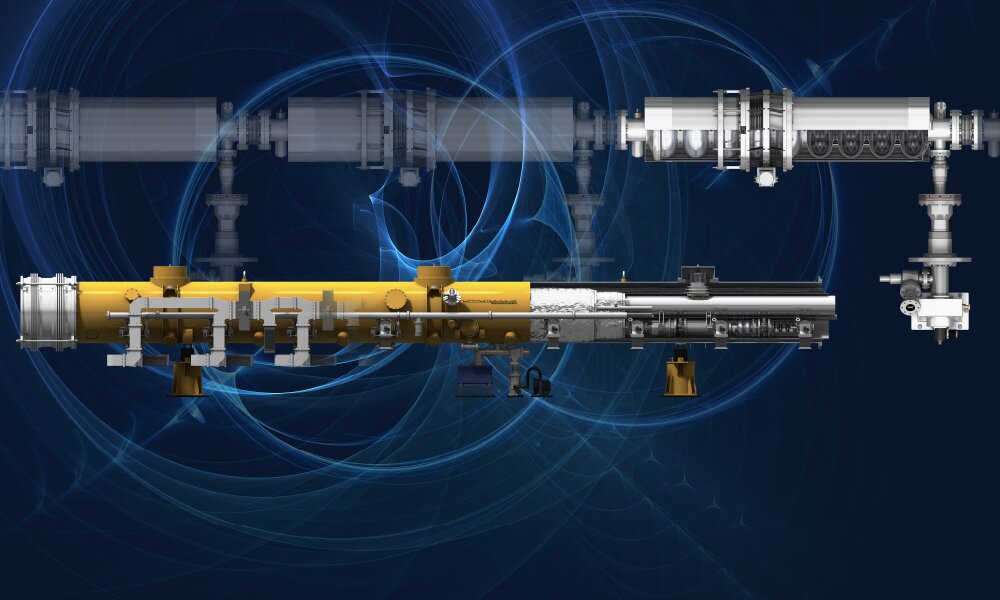
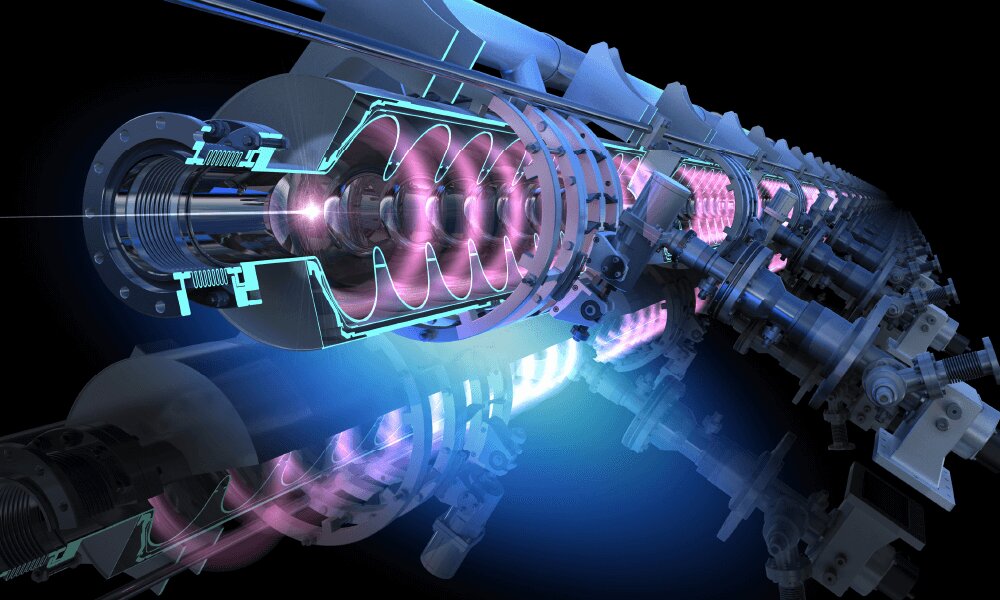
Superconducting Radiofrequency cavities are at the heart of the technology in the International Linear Collider. The ILC will use a voltage generator to fill a hollow structure called a cavity with an electric field. Made out of pure niobium, the cavities will be chilled to near absolute zero temperatures of 2 Kelvin, giving them have almost no electrical resistance and making them superconducting structures. Inside the cavities, the voltage of the field changes with a certain frequency – a radio frequency. Charged particles feel the force of the electric field and accelerate. Build a cavity made of a superconductor, chill it to near absolute zero, and you will have a superconducting rf cavity. String enough of these cavities together, and you will have a particle accelerator.

Further reading:

http://www.symmetrymag.org/cms/?pid=1000046

http://www.symmetrymag.org/cms/?pid=1000173

SID
Silicon Detector
One of the four detector concepts for the International Linear Collider.

SiLC
Silicon for the Linear Collider
SILC is an international R&D collaboration that is pursuing ways to develop the next generation of silicon tracking systems for a linear collider.

SLAC
Stanford Linear Accelerator Center
Located in Menlo Park, California, this Department of Energy laboratory is the site of the BaBar experiment.

SOCLE
Seminar Oriented towards a Contribution to an Electron Linear Collider
A meeting held twice a year to review the ongoing International Linear Collider detector R&D effort in France.

Further Reading: http://www.linearcollider.org/newsline/readmore_20060126_feature1.html

SoI
Silicon-on-Insulator detectors

SRF
Superconducting RF (See SCRF)

STF
Superconducting RF Test Facility
A proposed test facility at KEK for testing International Linear Collider components such as cavities, cryomodules, cryogenics, klystrons and modulators. The facilities initial operation is expected to begin in 2007.

Further reading: http://www.linearcollider.org/newsline/readmore_8Dec_stf.html

SUSY
SUperSYmmetry
A hypothetical symmetry relating particles of different spins. Under this symmetry, matter particles (spin one-half fermions) are related to force particles (spin-zero or spin-one bosons).

Further reading:
http://www.symmetrymag.org/cms/?pid=1000081
http://www.symmetrymag.org/cms/?pid=1000357
http://www.symmetrymag.org/cms/?pid=1000064

TDR
Technical Design Report
The Global Design Effort plans to write a Technical Design Report, the final report which will include specific details and schematics, for the International Linear Collider in 2008.

TESLA
TeV Energy Superconducting Linear Accelerator
The TESLA Technology Collaboration strives to advance superconducting RF technology R&D and related accelerator studies across the broad diversity of scientific applications.

TPC
Time Projection Chamber
A Time Projection Chamber is a gas-filled cylindrical chamber that acts like a three-dimensional electronic camera, making a photo-copy of a particle track as it flies through the detector.

Further Reading: http://www.linearcollider.org/newsline/readmore_20060622_feature1.html

TTC
TESLA Technology Collaboration
see "TESLA"

TTF
TESLA Test Facility

A test facility at DESY.

UCLC
University Consortium for Linear Collider R&D
The UCLC is a consortium of groups from more than 50 US universities, 7 national laboratories and 23 foreign institutions engaged in R&D for an International Linear Collider.

Back to Top


VTX
Vertex
Common abbreviation for vertex.

WWS
Worldwide Study of the Physics and Detectors for Future Linear e+e- Colliders

WWS Coordinates the work of the three regional studies: ECFA, ALCPG and ACFA. Results of the studies are combined in Linear Collider Workshops, held on an annual basis.

Further Reading: http://www.linearcollider.org/newsline/readmore_20060706_feature2.html

XFEL
X-Ray Free Electron Laser
The European X-Ray Laser Project at DESY.

Back to Top