Media Advisory
International Committee for Future Accelerators Delivers Update on Progress of the International Linear Collider, Thursday, February 8
Who:
The International Committee for Future Accelerators (ICFA)
What:
Announcement of the Reference Design Report for the International Linear Collider
Where:
Room C305 in the Main Building of the Institute of High Energy Physics
(IHEP), 19 Yuquanui Road, Shijingshan District, Beijing, China
When:
Thursday, February 8 at 12:00 p.m. (Beijing time) (4:00 a.m. Greenwich Mean Time)
Background:
The International Linear Collider is a proposed electron-positron collider. The Reference Design Report provides the first detailed technical snapshot of the ILC and includes a preliminary value estimate to obtain guidance for optimisation of both the design process and R&D during the engineering phase. More information about the ILC is available at www.linearcollider.org.
Contacts:
Elizabeth Clements, ILC-Americas, +1-630-399-1777, lizzie@fnal.gov
Youhei Morita, ILC-Asia, +81-29-879-6047, youhei.morita@kek.jp
Perrine Royole-Degieux, ILC-Europe, +33-6-74-11-73-78, royole@in2p3.fr
Barbara Warmbein, ILC-Europe, +49-170-3346816, barbara.warmbein@desy.de
- ICFA press release
- The Estimate Explained (pdf)
- ILC-by-the-numbers
- The International Linear Collider - Gateway to the Quantum Universe (1.5MB pdf)
- The Reference Design Report-Draft (10MB pdf)
- The Reference Design Report-Draft (10MB pdf) (Asian Mirror Site)
- The Reference Design Report-Summary (1.6MB pdf)
- Video of the press conference (Real Media)
| Schematic | Schematic |
|---|---|
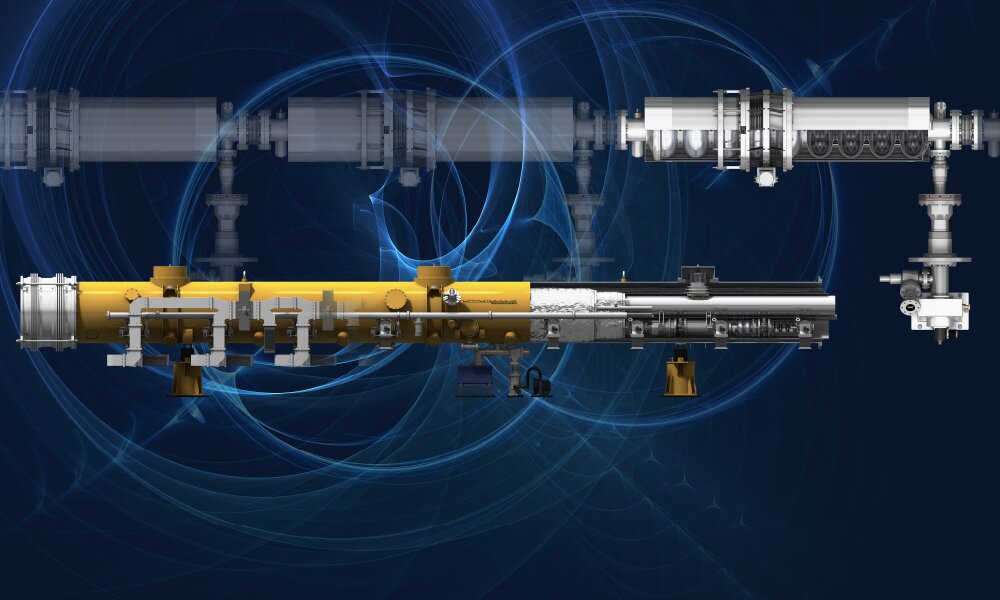
| A schematic layout of the International Linear Collider. | A schematic layout of the International Linear Collider. |
| Med Res | Hi Res | Med Res | Hi Res |
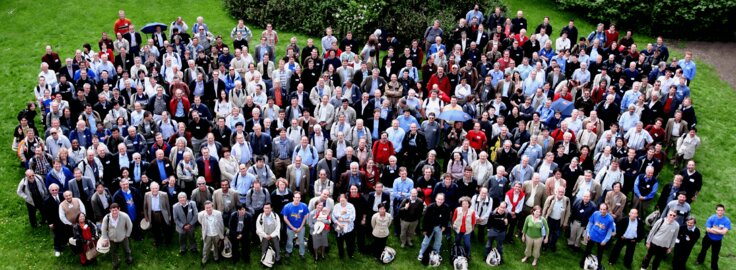
| Barry Barish | A Collaboration Image |
| Barry Barish, Director of the Global Design Effort for the International Linear Collider | Approximately 1000 scientists and engineers from around the world are contributing to the International Linear Collider. |
| Med Res | Hi Res | Med Res | Hi Res |
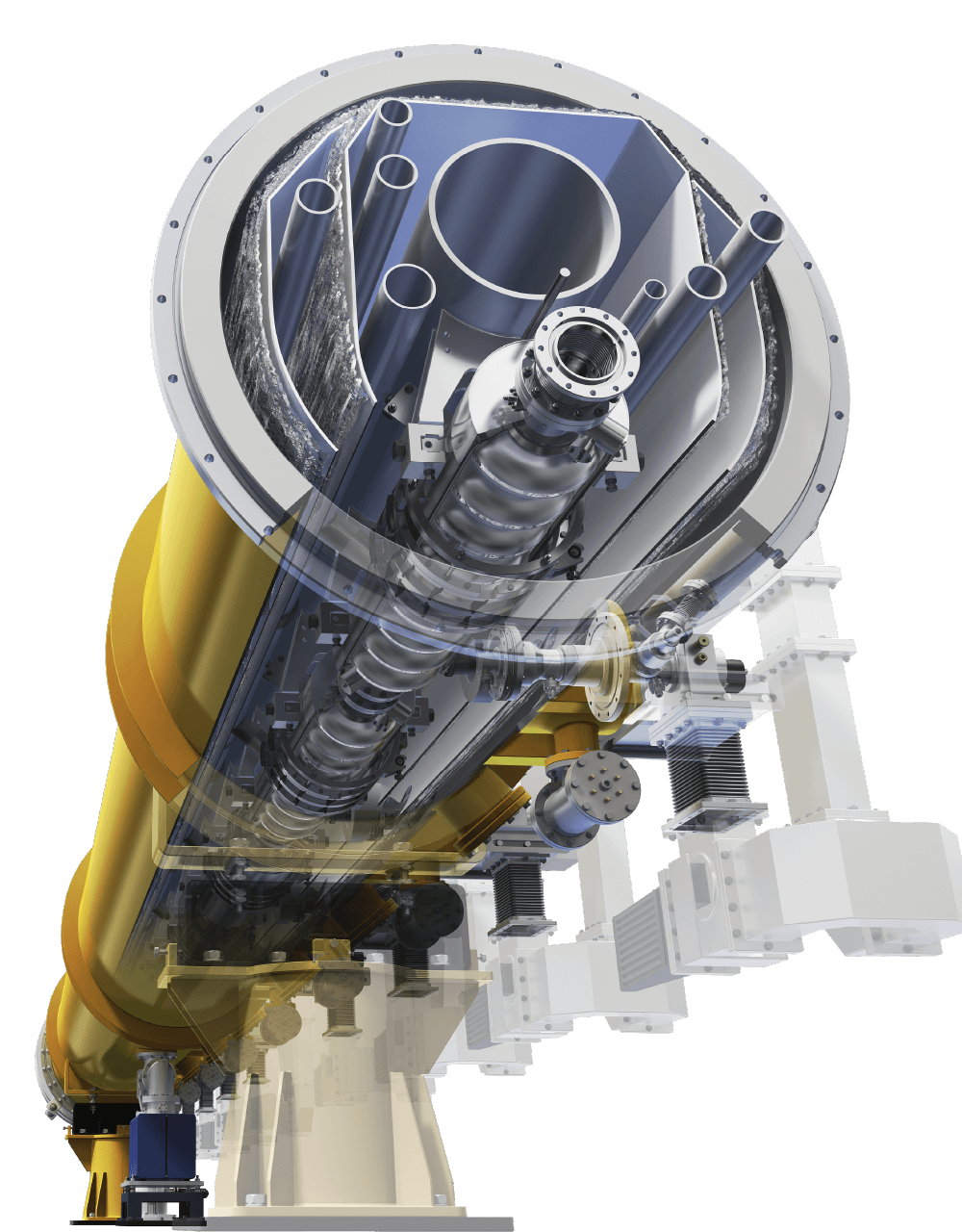
| Cavities | Cavities |
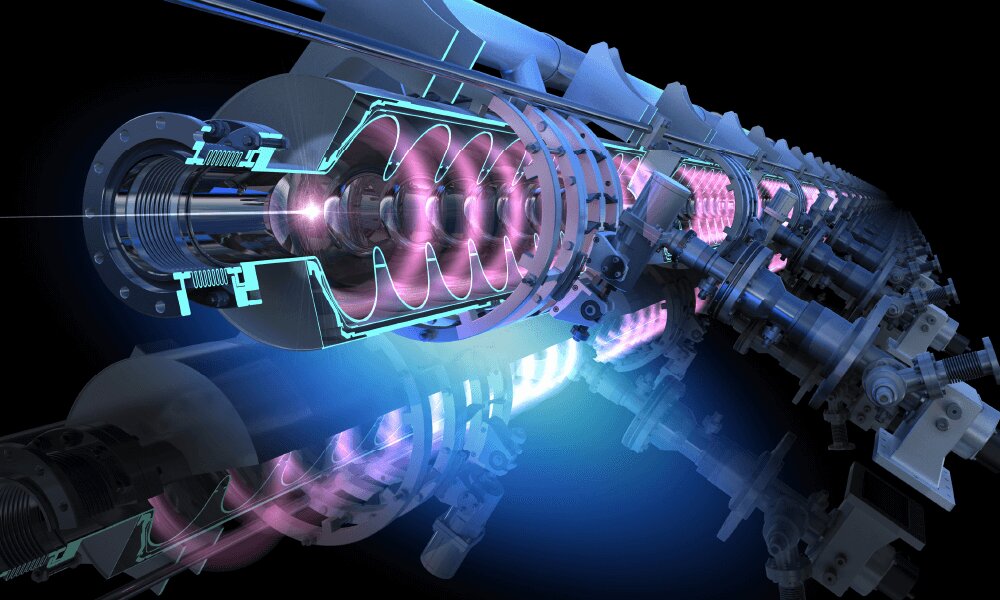
| The ILC will use 16,000 superconducting cavities to accelerate the electrons and positrons to extremely high energies. | The 1-metre long superconducting cavities are made from pure niobium, polished to provide micron-level surface quality for accelerating particles. |
| Med Res | Hi Res | Med Res | Hi Res |
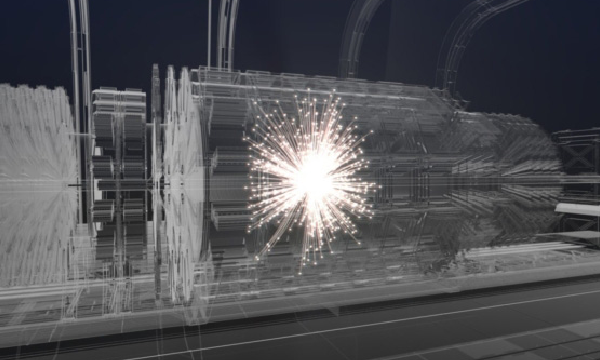
| Cryostat | Detectors |
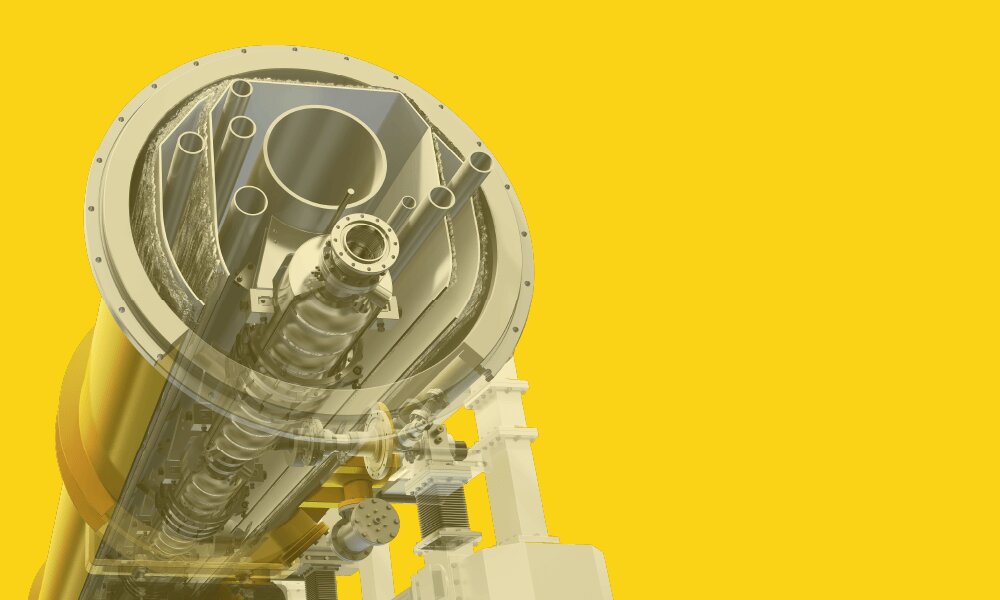
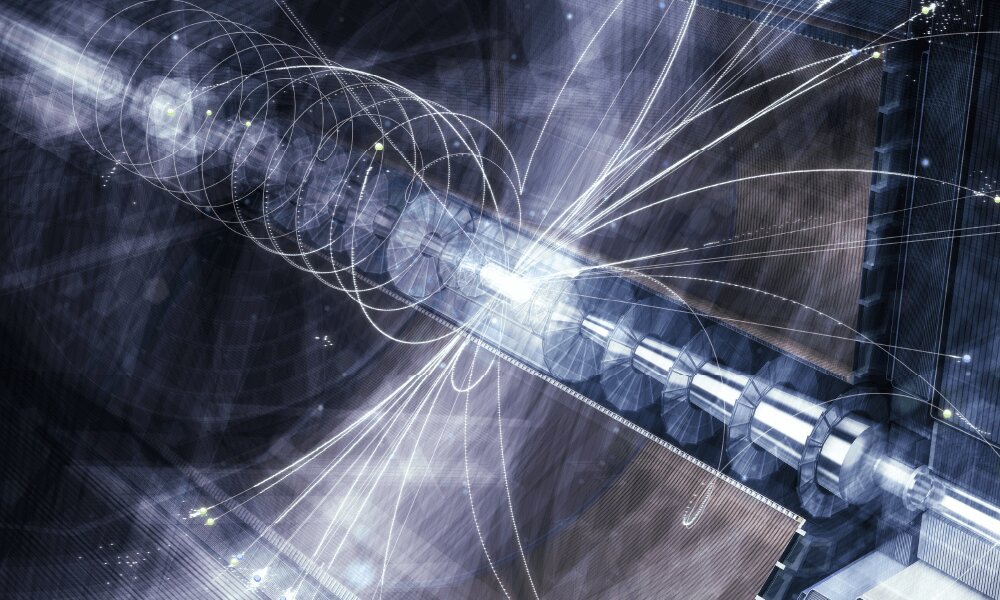
| A cryostat for ILC R&D studies. The superconducting cavities for the ILC will sit inside cryostats - vessels surrounded by thermal shields and an outer tank - to maintain their near absolute zero temperatures. | Simulated response of linear collider detector to the production of two Z bosons. Each of the Z bosons decays into a pair of jets. (Credit: Norman Graf) |
| Med Res | Hi Res | Med Res | Hi Res |
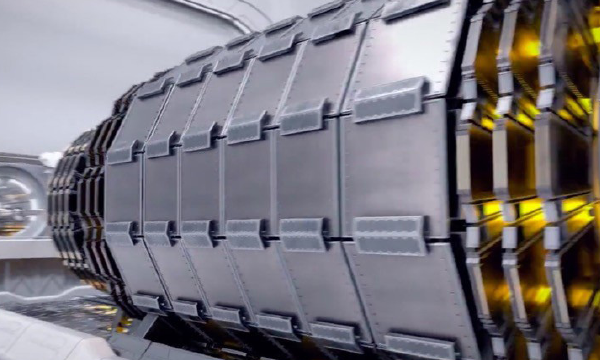
| Detectors | |
| Artists's rendering of the planned collider detector for the international linear collider. (Courtesy of KEK) | |
| Med Res | |